Textile Heritage · Ethical Sourcing · Bedding
Icelandic Eiderdown: How Ethical Sourcing Shapes a Distinctive Bedding Material
Among the rarest natural fillings used in bedding, Icelandic eiderdown is defined not only by its extraordinary lightness, but by the unusual relationship between its collection and the wild birds that produce it. Its story begins along the coast, in nesting habitat, and continues through careful gathering, cleaning, and craft.
Published October 13, 2026
Eiderdown has a presence that is almost paradoxical: it feels exceptionally delicate, yet it has a remarkable ability to hold warmth. The material is collected from nests made by female eider ducks, rather than obtained as a routine by-product of raising birds for food. That distinction gives Icelandic eiderdown a particular place in the history of luxury textiles—and makes its sourcing practices central to any thoughtful discussion of its value.
To understand the material, it helps to look beyond the finished duvet. The name encompasses a wild bird, a coastal habitat, a seasonal nesting cycle, and a tradition of human stewardship. Ethical sourcing is not an ornamental claim attached at the end of that chain. It depends on how the birds and their habitat are treated, who is permitted to collect the down, how the material is traced, and whether the finished product’s claims can be substantiated.
This guide explains how eiderdown differs from goose and duck down, why nest collection is distinctive, and what responsible sourcing language can—and cannot—tell a reader. It also considers construction and care, because even a prized filling depends on the shell, stitching, and handling that preserve its qualities.
A material made by nesting birds
The common eider, Somateria mollissima, is a sea duck found across northern coastal regions. In Iceland, as elsewhere in its range, the female prepares a nest and lines it with down plucked from her own breast. The soft fibers form a sheltered layer around the eggs, helping insulate them from cold and changing weather. This is the beginning of eiderdown: a natural material made for a specific purpose in a specific place.
That origin differs from conventional down supply chains, in which goose or duck down is generally collected from birds raised in agricultural systems. Those systems vary, and their welfare practices must be evaluated individually. Eiderdown, by contrast, is associated with a wild nesting cycle and the careful collection of down from nests. The distinction is meaningful, but it should not be simplified into a guarantee that every product described as eiderdown is automatically ethical. The quality of the claim depends on the actual collection and processing practices behind it.
In Iceland, eiderdown gathering has a long history. Collectors traditionally work in nesting areas and gather down in connection with the birds’ seasonal activity. Practices and timing can vary by site and local rules; responsible collection must account for the nesting birds and avoid disturbing them. In some traditions, gathered material is replaced with suitable nesting material so that the nest remains protected. Such details are important to verify rather than assume: a short product description may not explain exactly how a particular batch was collected.
The setting is not incidental. Eider colonies depend on coastal habitat, and their welfare is bound up with the condition of nesting grounds and the local ecosystem. A responsible account should therefore include more than the appealing image of a natural fiber. It should explain how collection is controlled, how disturbance is minimized, and how the people working in the area protect the conditions on which the birds depend.
Why eiderdown feels different
Down is not a feather in the familiar sense. It is a cluster of fine fibers that radiate from a central point, creating a three-dimensional structure capable of trapping still air. That trapped air helps slow the movement of heat, giving down its insulation without requiring a heavy, solid layer. Eiderdown is particularly valued for the way its fine fibers form cohesive clusters and interlock. This can produce a supple, light filling with notable insulating performance.
These characteristics are often described in poetic language—cloudlike, weightless, exceptionally soft. The impressions are understandable, but they are not a substitute for useful specifications. A duvet’s warmth depends on several factors: the amount and quality of its fill, the size and arrangement of its compartments, the fabric enclosing it, and the room and sleeper for which it is intended. A material’s reputation alone cannot predict how warm a finished comforter will feel.
Fill power is a common comparison measure for goose and duck down. It describes the volume occupied by a given weight of down under a defined testing method; higher values generally indicate greater loft per unit of weight. Eiderdown is not always presented or compared in the same way as conventional down, so shoppers should be cautious about treating a number as a universal ranking. Ask what the specification measures, and whether it applies to the filling or to the complete duvet.
Nor is “more loft” automatically better for every sleeper. A warm bedroom, a naturally hot sleeper, or a preference for light covers may call for less insulation. In cooler conditions, a more substantial duvet—or thoughtful layering—may be more comfortable. Eiderdown’s attraction lies in the character of the material and its insulation-to-weight qualities, not in an assumption that one warmth level suits everyone.
Nest gathering and the ethics of sourcing
Because eiderdown is gathered from nests, ethical sourcing begins with the collection method. A credible account should make clear that harvesting is managed around the nesting cycle and that the welfare of birds takes precedence over the quantity gathered. It should also describe how access to nesting sites is controlled, how collectors reduce disturbance, and whether relevant local conservation requirements are followed.
Traceability is another essential part of the picture. “Icelandic” may describe the origin of the down, the place where it was processed, the location of manufacture, or a combination of these. Those are not interchangeable. A finished duvet can be made in one country with filling collected in another, and the shell fabric may have yet another origin. Clear labeling distinguishes these stages instead of allowing a geographical association to imply more than it proves.
Readers can look for answers to practical questions:
- Does the maker identify the down’s country or region of origin?
- Is the collection method described, including how nesting birds and habitat are protected?
- Can the supplier explain how the raw material is tracked through cleaning and manufacture?
- Are animal-welfare or environmental claims connected to a named, relevant standard or documented practice?
- Does the maker distinguish the origin of the fill from the location where the duvet is assembled?
- Are care instructions and repair or longevity guidance available, supporting use over time?
These questions are not an accusation; they are a way to separate a substantiated sourcing story from evocative language. Terms such as “natural,” “responsible,” “ethical,” and “sustainable” can mean different things in different contexts. Specific information is more useful than a broad assurance.
Certifications can help, but their scope matters. The Responsible Down Standard (RDS), for example, is a standard associated with animal-welfare and chain-of-custody requirements for down and feathers within its defined certification system. A reference to RDS should be checked against the product and supply chain in question: readers can ask whether the exact filling is covered, whether the claim is current, and what stage of the chain has been certified. A certification does not automatically answer every question about habitat, local collection traditions, or wider environmental impact. Conversely, the absence of a familiar label does not by itself tell the whole story of a specialized wild-harvest material. Evidence and precise scope remain important.
Eiderdown beside goose and duck down
Goose down, duck down, and eiderdown are all natural insulating fills, but their characteristics and sourcing contexts differ. Goose and duck down are more widely used and may be described by fill power, species, country of origin, treatment, and certification. Eiderdown is comparatively rare and is associated with nest collection. These differences make a simple “best to worst” comparison misleading.
For conventional down, the proportion of down to feather matters. Feathers have a central quill and generally feel firmer and heavier; down clusters are softer and trap air differently. Construction also affects performance. Baffle-box compartments create internal walls that help maintain space for the fill, while stitch-through designs sew the upper and lower shell fabrics together. Each approach has trade-offs, and neither can compensate for unclear material information.
For eiderdown, buyers may encounter a high-value duvet framed around rarity, origin, and craftsmanship. The essential questions remain practical: What exactly is in the filling? How is it distributed? What does the shell consist of? How is the duvet intended to be cleaned? What documentation supports the sourcing description? A careful answer should bring these details together rather than relying on prestige language alone.
Alternatives also deserve a fair comparison. Down-alternative fills, including recycled polyester and plant- or wood-cellulose-derived fibers, can offer different care routines, material profiles, and price points. They will not reproduce every quality of natural down, but they may suit people who prefer to avoid animal-derived fillings or want a different maintenance approach. The right choice depends on personal priorities, climate, sensitivity, budget, and the product’s verifiable information—not on a hierarchy in which rarity is automatically synonymous with virtue.
The craft is in the construction
A fine filling needs a well-considered enclosure. The shell must be tightly woven enough to contain small fibers while remaining appropriate to the desired feel and breathability. Cotton is common; silk may be used in specialist luxury bedding. Neither material is inherently superior in every context. The weave, weight, finishing, and quality of construction all influence how the duvet feels and performs.
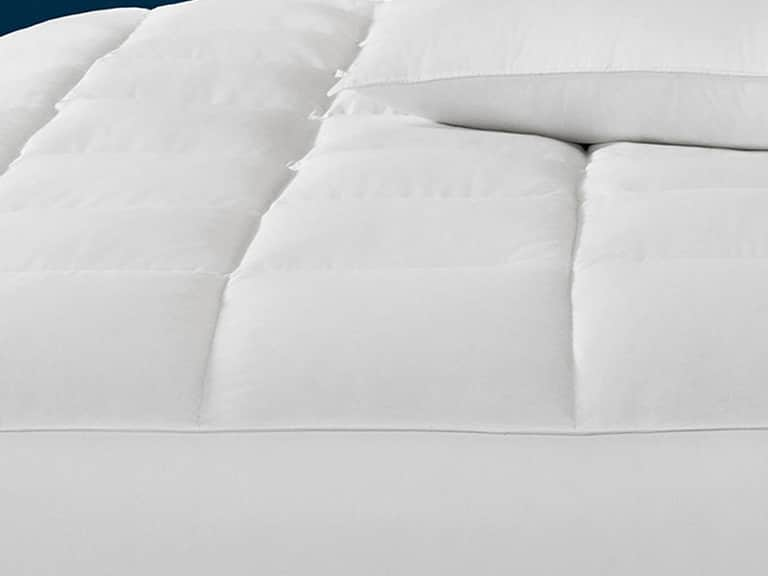
Compartment design matters, too. Baffles create internal walls that help give down room to loft, while sewn-through squares create a flatter profile and may suit lighter constructions. Corner loops or ties allow the insert to connect to a duvet cover, reducing migration and bunching during the night. Even distribution supports more consistent coverage and helps limit cold areas.
These are small details with a long life in everyday use. A duvet is handled, aired, covered, stored, and occasionally cleaned. Strong seams, secure compartments, and a cover that fits the insert well can help protect the filling and extend the useful life of a carefully made textile. Craft, in this sense, is not merely decorative finishing. It is the design of an object meant to perform over many seasons.
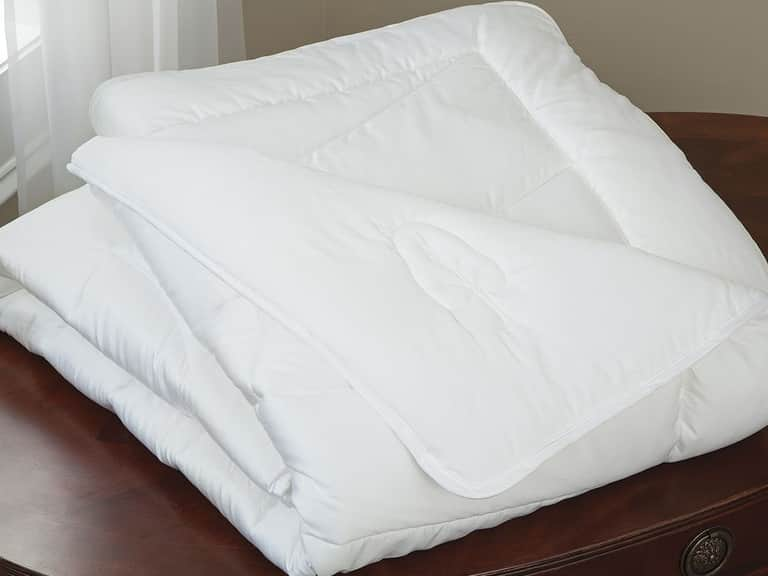
As one example of the kind of information readers may encounter, the Utopia Duvet is described as using eiderdown, a silk jacquard shell, and baffle-box construction, with dry-clean-only care. Its listing also refers to Responsible Down Standard certification. For any specific product, readers should confirm the current documentation and the precise scope of a certification with the maker; a product description is a starting point, not a substitute for supply-chain detail.
Care for a specialist duvet
Down’s insulating ability depends on its loft. Dirt, moisture, and compression can interfere with that structure, so routine care is usually about protection and gentle maintenance rather than frequent washing. A removable duvet cover is the first line of defense. It can be laundered more regularly than the insert, reducing the need to clean the filling itself.
Follow the care label above general advice. Eiderdown products may have specialist requirements, and a silk shell, delicate seams, or particular finish can affect the recommended cleaning method. If a label specifies professional cleaning, do not assume that a domestic washing machine is a safe substitute. Ask the manufacturer or a cleaner experienced with down-filled bedding about suitable handling.
Between cleans, air the duvet in a dry, well-ventilated space when practical. Avoid prolonged direct sunlight, which can affect fabrics, and do not put a damp duvet away. For storage, choose a clean, breathable fabric bag with enough room to avoid prolonged compression. Sealed plastic may trap residual moisture, so it is generally less suitable for long-term storage of natural textiles.
When a duvet needs cleaning, thorough drying is crucial. Moisture remaining within down can encourage odor and damage the material. This is one reason specialist products deserve specialist attention: the goal is not simply to make the shell feel dry, but to ensure that the fill is dry throughout and that its clusters have recovered. If the care instructions are unclear, a question to the maker before cleaning can prevent an expensive mistake.
A considered approach to luxury
The appeal of Icelandic eiderdown is inseparable from its particular origin. It is a material shaped by a bird’s nesting behavior and by human practices developed around a coastal environment. That connection gives it an unusual place among bedding fills, but it also calls for care in how the story is told. Romantic descriptions of wildness should not obscure the practical questions of stewardship, traceability, and verification.
For a reader considering an eiderdown duvet, a measured approach is more useful than either uncritical admiration or blanket skepticism. Learn what the name means, ask where the fill comes from, establish how the collection is managed, and understand what a certification covers. Then consider the construction, warmth, cleaning requirements, and expected longevity of the finished piece.
Luxury, at its most thoughtful, is not simply a question of softness or rarity. It is attention to materials and their origins, to the skill with which they are made, and to the care that allows an object to remain useful. Eiderdown’s finest story is therefore not only how light it feels on a bed. It is whether the practices behind that lightness are described with the same precision and respect as the textile itself.
Frequently asked questions
Is Icelandic eiderdown collected from living birds?
Traditional eiderdown collection is associated with gathering down from nests rather than plucking it from birds. Practices and controls should still be verified for a particular source. Ask the maker how collection is timed and managed, and what protections apply to nesting birds and habitat.
Is eiderdown warmer than goose down?
Warmth depends on the fill, its quantity, the duvet’s construction, and the sleeper’s environment. Eiderdown is prized for lightness and insulation, but a product cannot be judged by material name alone. Compare stated warmth guidance and construction details where available.
Does a certification prove that every part of a product is sustainable?
No. Certifications have defined criteria and scopes. Check which material and stages of the supply chain are covered, and consider other details such as origin, processing, shell fabric, and product lifespan separately.
Can an eiderdown duvet be machine washed?
Do not assume so. Care instructions vary by product, and specialist down or delicate shell fabrics may require professional cleaning. Follow the label and consult the maker if the guidance is uncertain.